

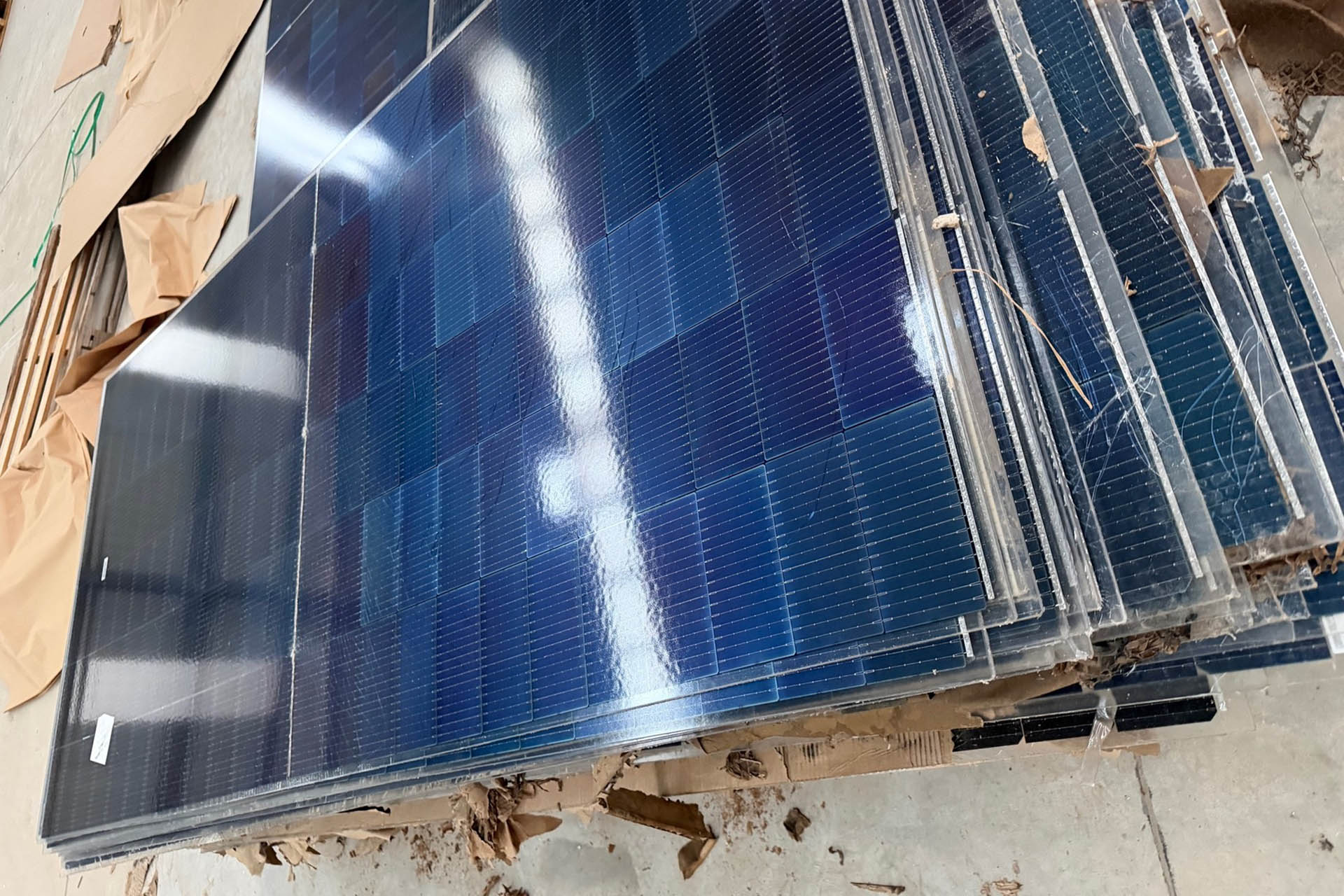
Solar Panel Waste: Numbers and Nuisance
As a co-founder at BEYOND, I’m deeply passionate about leading the charge toward a greener, cleaner, and circular future. The solar energy revolution has brought us closer to this vision, but with it comes an often-overlooked challenge: solar panel waste. In this blog, I’ll walk you through the numbers behind this growing issue and explore how we, as entrepreneurs and innovators, can turn this nuisance into an opportunity.
To measure solar energy’s profound impact, we must contemplate the “carbon footprint” — a metric that quantifies the total greenhouse gas emissions caused by an individual, organization, event, or product. Traditional electricity production contributes heavily to a nation’s footprint, with fossil fuels being the predominant energy source. By harnessing solar energy, we offset these emissions and aid in the progressive decline of our collective carbon footprint.
The Solar Boom and Its Shadow
India's solar industry has been on an exhilarating growth trajectory. Since 2015, we've been adding solar capacity at an unprecedented rate, aiming for 500 GW of non-fossil-fuel based energy generation by 2030. In 2022 alone, we installed 17.4 GW of solar capacity, making India the third-largest country for new solar installations. This rapid expansion is thrilling, but it also brings a significant challenge: what happens to all these panels at the end of their life?
The Growing Pile of Solar Waste
Solar panels generally have a lifespan of 20-25 years. However, many are decommissioned prematurely due to damage or inefficiency. The Council on Energy, Environment, and Water (CEEW) estimates that by the end of FY21, India had already accumulated around 285 kilotons of solar waste from its existing 40 GW of grid-connected capacity. Looking ahead, the projections are staggering. By 2040, even under the best-case scenario, we're looking at around 0.9 million tonnes of solar PV waste. In a less optimistic scenario, this figure could rise to as much as 5.7 million tonnes. These numbers highlight the urgent need for effective waste management solutions.
A Global Perspective
The solar waste issue isn't just an Indian problems, it's a global one. The International Renewables Energy Agency (IRENA) projects that cumulative global solar PV waste could reach 60-78 million tonnes by 2050. Asia, home to leading solar adopters like China, Japan, and India, is expected to generate the highest volume of this waste. This underscores the need for international cooperation and innovation in tackling solar waste.
Turning Waste into Opportunity
At BEYOND, we see solar waste not as a nuisance but as an opportunity. The challenge lies in the lack of adequate recycling infrastructure. Despite the potential to recover up to 80% of the materials in a PV panel, current recycling rates are woefully low, at around 10%. This is primarily due to insufficient organization and the high cost of recycling compared to landfill disposal. But where others see a problem, we see potential.
India's Policy Response and Our Role
India is taking steps to address this issue. The government introduced new E-Waste Management Rules in 2022, classifying waste solar PV modules as e-waste. This policy places the responsibility for collection and recycling on the producers, under an Extended Producer Responsibility (EPR) framework. This is a significant step forward, but we believe more can be done.
BEYOND's Vision for a Circular Solar Economy
We at BEYOND are committed to pioneering comprehensive recycling solutions. Here are some strategic steps we believe can drive this change:
- Effective Categorization: Clear categorization of solar PV waste will help define the necessary recycling infrastructure and market for secondary materials.
- Mandatory EPR Scheme: Extending the EPR framework to include solar waste will set up a funding model for waste management.
- Value-based Metrics: Developing value-based metrics to measure compliance with solar-centric regulations will promote high-value recycling.
- Landfill Restrictions: Coupling landfill restrictions with product stewardship schemes will encourage recycling and collection activities.
- Mobile Recycling Plants: Developing mobile recycling units can reduce transportation costs and increase recycling efficiency.
- Robust Tracking Systems: Implementing labelling and tracking systems for PV modules will ensure secure handling and shipment.

Leading by Example
As entrepreneurs, we have the power to lead by example. By investing in advanced recycling technologies and advocating for robust policies, we can transform the solar waste challenge into a sustainable business opportunity. At BEYOND, we’re dedicated to driving this transformation and ensuring that the benefits of solar energy are realized by current and future generations.